
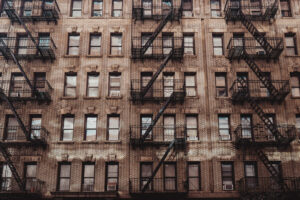
It’s Spring 2026, so I must be writing about Seattle’s Katie Wilson or New York City’s Zohran Mamdani. Living in Forest Hills, NY, it’s the latter. But this brief should be useful for Seattle as well. What was affordable housing before Mamdani? Answer is, the policy that was tailored roughly around the constituency who voted for Eric Adams, the most recent former mayor; i.e., deferential to homeowners, landlords, and the real estate industry. In late 2025, that constituency lost out to one dominated by renters.
That question was also well answered by Jonathon Mahler of the New York Times Magazine on March 22, 2026 in his article “City of Renters.” In the article, he chronicles the story of Douglas Eisenberg, a quintessential slumlord with these slumlord stats:
-
160,000 units
-
180 buildings
-
8,761 code violations in 2025
-
Defaulted on a $506 million loan
-
Gave $125,000 to Cuomo for Mayor
-
Business model based on speculative real estate investment, provided he could raise rents once units become vacant, and other specifics – fast eviction process; rent boost based on 6% of expenditures for upgrades; and charge tenants 1/60 of the cost of building repairs.
Does anybody seriously think that affordable housing will increase under this scheme?
Eisenberg lost his bet. Slumlordism no longer works in NYC. Shall we shed a tear? I think the voters weighed in and said no. So Mamdani and his housing expert Cea Weaver seek a re-do. Their instinct is to settle and redirect efforts at the point where Eisenberg is headed, during a foreclosure sale or bankruptcy auction. That’s smart. But what, specifically, should they do to make affordable housing a reality rather than a campaign slogan?
To answer that, we need to establish first principles of affordable housing in urban governance at the outset, in these areas of policy: 1) prices and tax policy; 2) repudiate most private sector incentives (the so-called trickle-down economics of the 80s); 3) public banking and self-insurance; 4) clear away obstacles hindering community land trusts; and 5) end the city’s obligation to sell city land to the highest bidder, and the first right-for-refusal to qualified non-profits/renters to acquire properties entering the market.
With these principles, we can safely move away from a well-worn method that is known not to work, yet people continue to look for different results. I know Wilson and Mamdani do not suffer from insanity, so maybe they’ll agree with this brief and use it to promote their agenda.
Principle 1 – Prices and tax policy
If people are told to stand in a line and if they do, each will receive a $50 bill until the money runs out, is it a conspiracy that people form a line and wait for the money? Is it any less a conspiracy that laws over decades and centuries favor land speculation as a means to obtain unearned wealth, and people pursue that speculation?
Few serious people who understand urban governance disagree that urban land values are directly related to what the public sector does or doesn’t do. People choose NYC to live and visit for business, entrepreneurial, and wage opportunities, the networking pool, parks, restaurants, night life, entertainment, and public safety reasons.
When running well, some say … what a miracle! What could we use to fund this miracle? Taxes on income, sales, property (buildings and land), fees and fines, and other nuisances come to mind. Of these, which one does not extract funds from people who earn what is asked to be given up? Income no, buildings – no, sales no, fees and fines – no, business – no. What’s left? Land values!
Economists understand that if 100% of the annual land value increment is captured and returned every year, to the agencies responsible for making the city desirable (i.e., services and infrastructure) there’s no reason why land should have ANY price. It is impossible to speculate on such land, because if land had a building on it, your property (although valuable locationally) can only be priced for the building itself, because the community has scooped up the land value, and the land ceases to be an investment… only the building has a price… making the property together much more affordable because the mortgage is based only on the building.
So, let’s end the free ride rentiers have had for centuries with their privilege to receive unearned land value, while others have to give up earned incomes and business profits to offset what’s lost to the rentiers. This leads to the next policy issue, on the repudiation of most of the private sector incentive model for affordable housing, based on the idea that luxury condo developers must be given 30-year property tax abatements in order for New Yorkers to get a measly 10% of the units in such a development as affordable, and those are often temporarily affordable.
Principle 2 – Repudiate most private sector incentives
Government incentives are supposed to help entrepreneurs in the affordable housing market so that they help outside-of-the-market people INDIRECTLY when the former succeed; it’s called trickle-down economics. In the case of affordable housing, it’s just like opportunity zones, they universally fail. The entrepreneurs win universally, while those whose plight is the purpose of the entire program succeed hardly ever. In NYC, this model was exemplified by a law known as 421a, but later renewed as 485-x in 2024. Estimates are that NYC loses $4 billion every year because of these programs, and the number increases every year because entire 485-x law is still in effect.
Such programs rely on the idea that the market will never supply affordable housing, because developers earn more when they build market-rate housing instead, and charge more despite using similar amounts of materials. So where did the public sector go? Above, a tax policy for public sector priorities, directing the provision of public amenities was identified, so affordable housing can and should be DIRECTLY provided through revenue from land value capture and return as well as programs identified subsequently. Trickle down economics never works … it’s actually a deception. Stop falling for it.
Ironically, it is 485-x that can be used to remove the building portion of a property tax bill and leave the tax for only land value – unearned income that nobody should ethically or morally miss. So, an effort should be made to retain the good portion of 485-x and end the rest. See https://www.nyc.gov/site/hpd/services-and-information/tax-incentives-485-x.page.
Principle 3 – Public banking and self-insurance
Commercial bankers have a point of view, but if public banks exist, their’s is not the only view that could be held up for scrutiny. So, what do banks do?
-
Provide credit for home development; public banks can do that
-
Create currency through the act of the loan; public banks can do that
-
Provide banking services for the public sector without having to pay a percentage for a private bank’s profit – public banks are non-profit; the Bank of North Dakota is an example of what is possible in this regard and they’ve been around since 1919. See https://bnd.nd.gov/.
In NYC, commercial banks jealously protect their privilege of holding public revenue and expect tribute in so doing; that would not be paid were the bank publicly chartered. This is what they say for reasons public banks should not exist:
-
a) Public banks present unfair competition as they are not subject to the same taxes, regulatory burdens, and capital requirements as private banks (boo hoo);
-
b) public funds compete with private enterprise … yes, so what?;
-
c) local government lacks the expertise to manage a bank … cities can subcontract private firms to effectively manage a public bank;
-
and d) public banks are less efficient and not cost effective as private banks … they can subcontract for efficiency and cost-effectiveness.
Recent failed New York legislation for municipal public banking, including SB1747 (2023-24) and SB1992/A6268 (2024-25) should be reintroduced in 2026. Legislators who vote against it should be primaried, and pro-public banking candidates run instead, perhaps with only this on their platform. See https://www.nysenate.gov/legislation/bills/2023/S1754 and https://www.nysenate.gov/legislation/bills/2025/A6268.
What can cities do regarding housing development insurance?
- Be self-insured and save on a service a housing development on public land does not need.
This is such a no-brainer it’s embarrassing to have to point it out.
Principle 4 – Clear away obstacles for non-contiguous community land trusts
The East Side community land trust (CLT), associated with the Cooper Union CLT, is an effective, non-profit method of achieving affordable housing in NYC. See https://www.coopersquarecit.org/. Whatever inherent difficulties there are for this type of affordable housing option, they overcame them. Cambridge, MA has implemented this model and it’s been successful for years on a city-wide basis. See https://cambridgecommunitylandtrust.org/.
An innovation that NYC could promote is the idea that such trusts could be non-contiguous, e.g., 15 buildings in Manhattan, 20 in Queens, 10 in Brooklyn, 5 in Staten Island, and 8 in the Bronx. Actually, this is the logic behind industrial monopolies, on how they minimize corporate administration costs. Natural monopoly of a community land trust is a desirable thing. CLTs from outside the US could apply to operate in NYC by applying as a non-profit. See https://nextcity.org/urbanist-news/a-new-map-tracks-the-growth-of-nycs-community-land-trusts.
The arguments against CLTs is that land in NYC is traditionally expensive and with the current competitive real estate market, and those prices are not likely to come down. But we know that in taxing land value, land prices tend to zero, so sometimes you have to chew gum and walk at the same time, as difficult as that may be. Perhaps there’s a logic for CLTs across the nation to become associated to accommodate people who must transfer for employment reasons; where people arrange transfers, perhaps in association with Airbnb. See https://www.lincolninst.edu/publications/articles/2023-07-finding-common-ground-conservation-land-trusts-affordable-housing-clts-collaboration/.
Principle 5 – Highest bidder wins and First Right-of-Refusal
Lastly, nothing should force NYC to sell anything it doesn’t want to sell … if NYC wants affordable housing, why does it set itself up to compete against billionaire slumlords? Short circuit that game. The Mayor has the power to direct a process to the benefit of affordable housing and he’s doing a good job, as described below. Just hold onto land amenable for affordable housing… why put it up for sale at all?
Regarding first right-of-refusal, I saved this for the end of this brief because there has to be a qualified organization ready and able to bid on properties. Why not allow existing community land trusts to acquire new units on a non-contiguous basis? So what if the entire city houses 50% of renters in non-profit, government-leased houses under the control of a single trust. The ability to pursue such a policy advance is under consideration in the City Council. See https://www.law.com/newyorklawjournal/2026/01/20/can-copa-pass-constitutional-muster/.
Mamdani should expand his executive authority (i.e., EOs 4 and 5) to expedite affordable housing development on city-owned land. Advocates of more affordable housing applaud this. Neighborhood Builders Fast Track Program, and pre-qualifying competent non-profits to shorten the RFP process are a few of the strategic steps he’s taken.
Conclusion
This brief is my recommendation. Mamdani should continue to turn vacant city lots to affordable housing, but never sell city land … lease it, so it never stops being available to advance affordable housing. We should use existing laws (485-x) to remove property taxes on homes while increasing taxes on land values pass legislation to create a NYC public bank … allow CLTs to be self-insured by having an association with the city through a land lease. Perhaps CLTs should become national, with well-funded, competent administrators. Together with land value taxation, there’s an opportunity for real synergies to benefit renters, i.e., real New Yorkers!
It’s time to kill the parasite of rentierism once and for all!
REPLIES